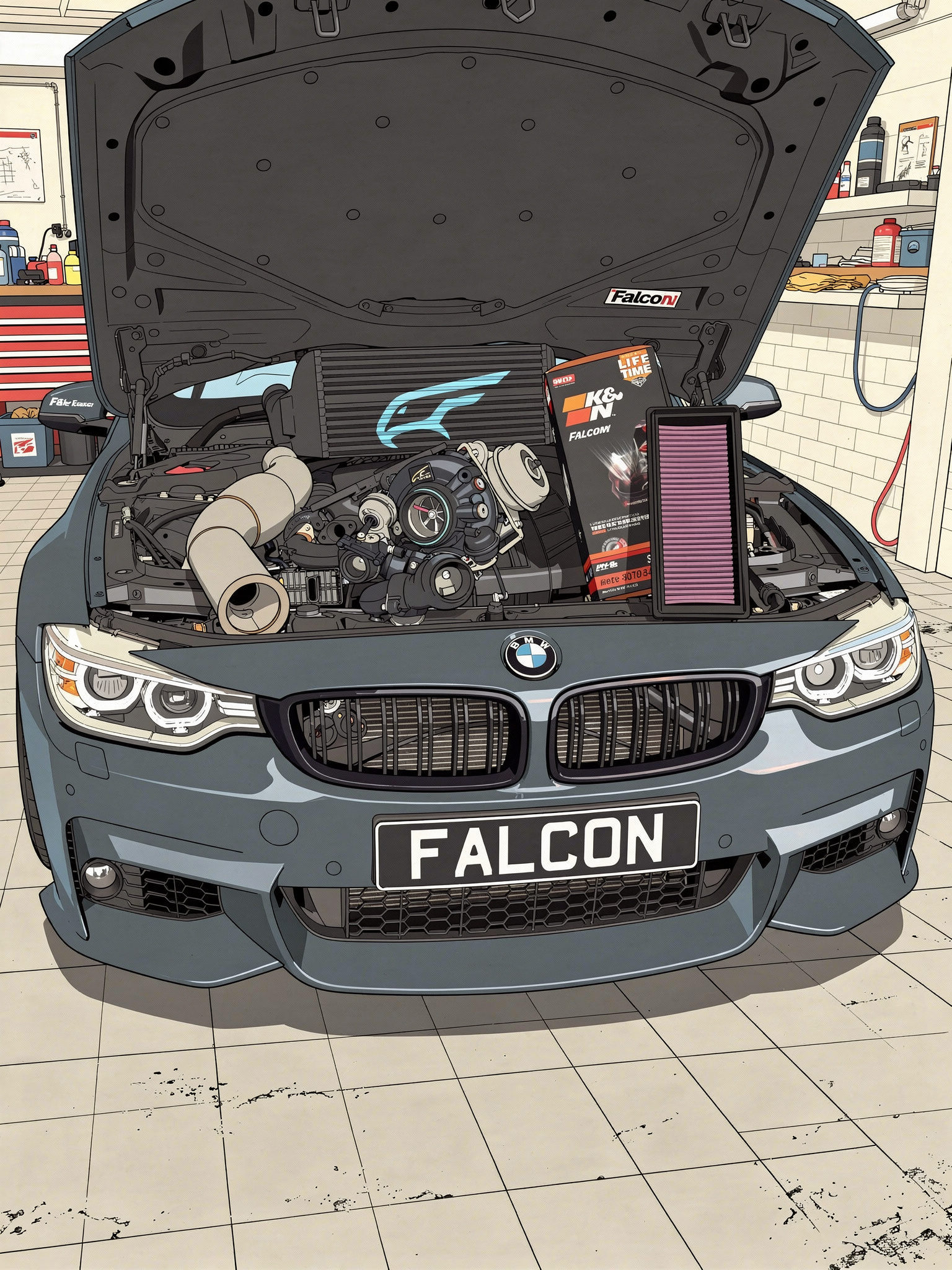
BMW 435d and 335d hybrid turbos and modifications
The BMW N57D30T1 twin-turbo engine fitted to the F30 335d and F32/F36 435d xDrive represents one of the most capable diesel platforms ever built. Delivering 313 PS (309 bhp) and 630 Nm of torque in factory trim, it blends everyday drivability with relentless low-down pull. The BMW F3# chassis 35d models come alive with the right modifications. 335d hybrid turbos and modifications transform the daily diesel into a serious performer.
Underneath the stock calibration lies an over-engineered aluminium block, robust forged internals, and an advanced sequential bi-turbo system ready to deliver substantial power gains.
What Holds the N57 Back in Factory Form?
While the engine is exceptionally robust and reliable, the factory package hits thermal, gas-flow, and volumetric bottlenecks early when pushed beyond a basic Stage 1 software remap.
- Exhaust Backpressure & DPF Restriction: The OEM Diesel Particulate Filter (DPF) and factory catalytic converter create significant backpressure immediately downstream of the turbine housings. Under continuous load at higher boost targets, exhaust gas temperatures (EGTs) climb rapidly, prompting the ECU to apply thermal fuel trims.
- Thermal Soak from the Stock Intercooler: The standard tube-and-fin front-mount intercooler is engineered for stock boost profiles. Push past 360–380 bhp, and inlet air temperatures (IATs) spike quickly during wide-open throttle pulls, causing ignition timing advance retraction and density loss.
- Factory Turbo Airflow Ceiling: The sequential turbocharger assembly uses a responsive high-pressure (HP) turbo to spool instantly off idle, seamlessly transitioning into a larger low-pressure (LP) turbo. Past ~380–390 bhp, the factory LP compressor wheel runs out of efficiency, blowing hot, compressed air while exhaust manifold backpressure spikes sharply.
- Fuel Flow & High-Pressure Rail Limits: The factory Bosch CP4.2 high-pressure fuel pump and rail assembly adequately sustain mid-range torque, but at extended RPM targets and higher boost pressures, rail pressure starts to drop, starving the engine of clean atomised diesel when aiming beyond 480 bhp.
Unlocking the Platform: Stage-by-Stage Hardware Upgrade Pathways
To move past the limits of factory software, the hardware chain must address breathing, cooling, and fuelling sequentially.
| Hardware Configuration | Supporting Modifications | Expected Output | Characteristics |
|---|---|---|---|
| DPF-Retained Hybrid Setup | Falcon Turbos 335d 435d Hybrid Turbos, Stock Intercooler, High-Flow Air Filter | ~420 HP | Fast spool, clean emissions profile, high mid-range torque |
| Full Flow & Thermal Upgrade | Falcon Turbos Hybrids, 3.5” Stainless Downpipe, Performance FMIC | ~485 HP | Drastically reduced EGTs, sustained top-end pull, razor-sharp transient response |
| Pushing Past 500 Limit Fuelling Build | Falcon Hybrids, 3.5” Downpipe, FMIC, Upgraded HPFP Shaft & Fuel Rail | 500+ HP / 900+ Nm | High-pressure diesel delivery sustained to redline, maximum volumetric efficiency |
Key Upgrade Components
- Falcon Turbos N57 Hybrid Turbochargers Upgrading both the high-pressure and low-pressure turbochargers changes the breathing dynamic entirely. With re-profiled compressor housings, larger billet compressor wheels, and high-flow, heat-resistant turbine shafts, backpressure drops while airflow volume increases dramatically across the entire rev band. The hybrid setup preserves instant low-rpm boost response while pulling hard past 4,500 RPM.
- 3.5” High-Flow Downpipe Replacing the standard emissions bottleneck with a mandrel-bent 3.5” downpipe eliminates high turbine backpressure. Removing this restriction drops EGTs significantly, protects turbocharger bearings from excessive heat soak, and allows tuners to command leaner, more aggressive spool-up timing.
- Stepped Front Mount Intercooler (FMIC) Increasing core depth and frontal surface area keeps IATs stable within single digits of ambient temperatures, even across repeated 1/4-mile passes or continuous high-speed runs. Denser, cooler charge air directly improves burn efficiency and combustion chamber pressure without over-spinning the compressor.
- High-Pressure Fuelling Overhauls (500+ HP Target) Once air mass flow is unlocked, the fuel delivery system must match it. Upgrading the high-pressure fuel pump drive/shaft mechanism alongside enlarged fuel rail delivery channels prevents rail pressure sag under high-duration injection events. This delivers the necessary fuel mass for clean, smoke-free combustion right to redline.
With the right balance of hybrid turbocharger engineering, reduced exhaust backpressure, efficient charge cooling, and reinforced fuelling, the 335d and 435d transform from smooth motorway cruisers into legitimate supercar-hunting diesels capable of consistent 4-second and sub-4-second 0–60 mph launches via xDrive.
Contact us the team today if you have any questions about unlocking the full potential of your N57 BMW 335d or 435d with high-performance upgrade turbos and parts from Falcon Turbos.